


Description
Discount! Buy 4 or more lots of 1000 bags and get 5 % off - Automatically applies at checkout
| Specification | Details |
|---|---|
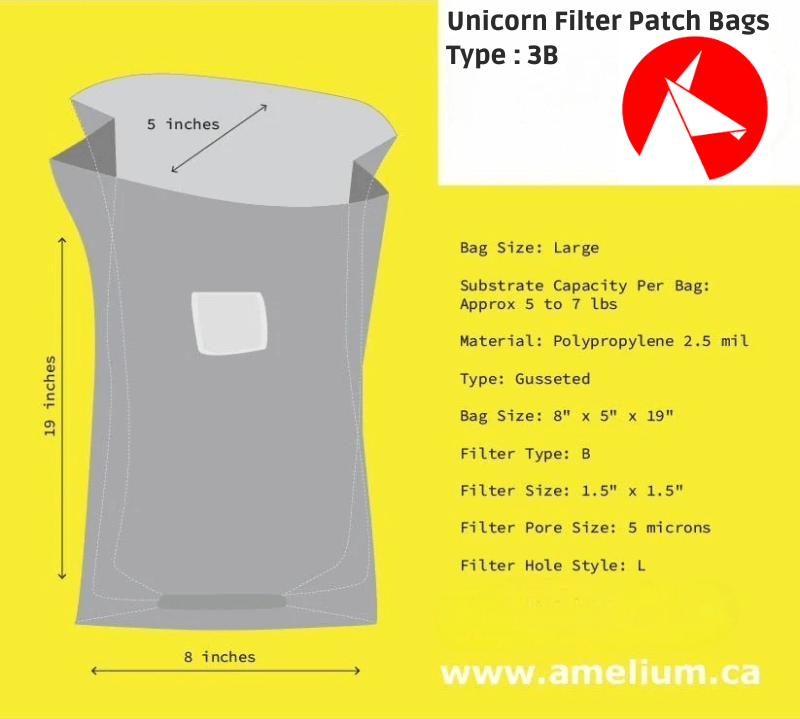
| Bag Size | Large |
| Substrate Capacity Per Bag | Approximately 5 to 7 lbs. (2.3 to 3.2 kg) |
| Material | Polypropylene, 2.5 mil |
| Type | Gusseted |
| Dimensions | 8" x 5" x 19" (20.3 × 12.7 × 48.3 cm) |
| Filter Type | B |
| Filter Size | 1.5" x 1.5" (2.54 cm × 2.54 cm) |
| Filter Pore Size | 5 microns |
| Filter Hole Style | L |
| Price Per Bag |
Unicorn Type B Filter Patch Bags
These bags are identical in construction to the 14A and 3T models, with the key difference being the inclusion of a Type B filter. They are commonly used with substrate for mushroom production and are well suited for applications requiring higher gas exchange and fruiting blocks.
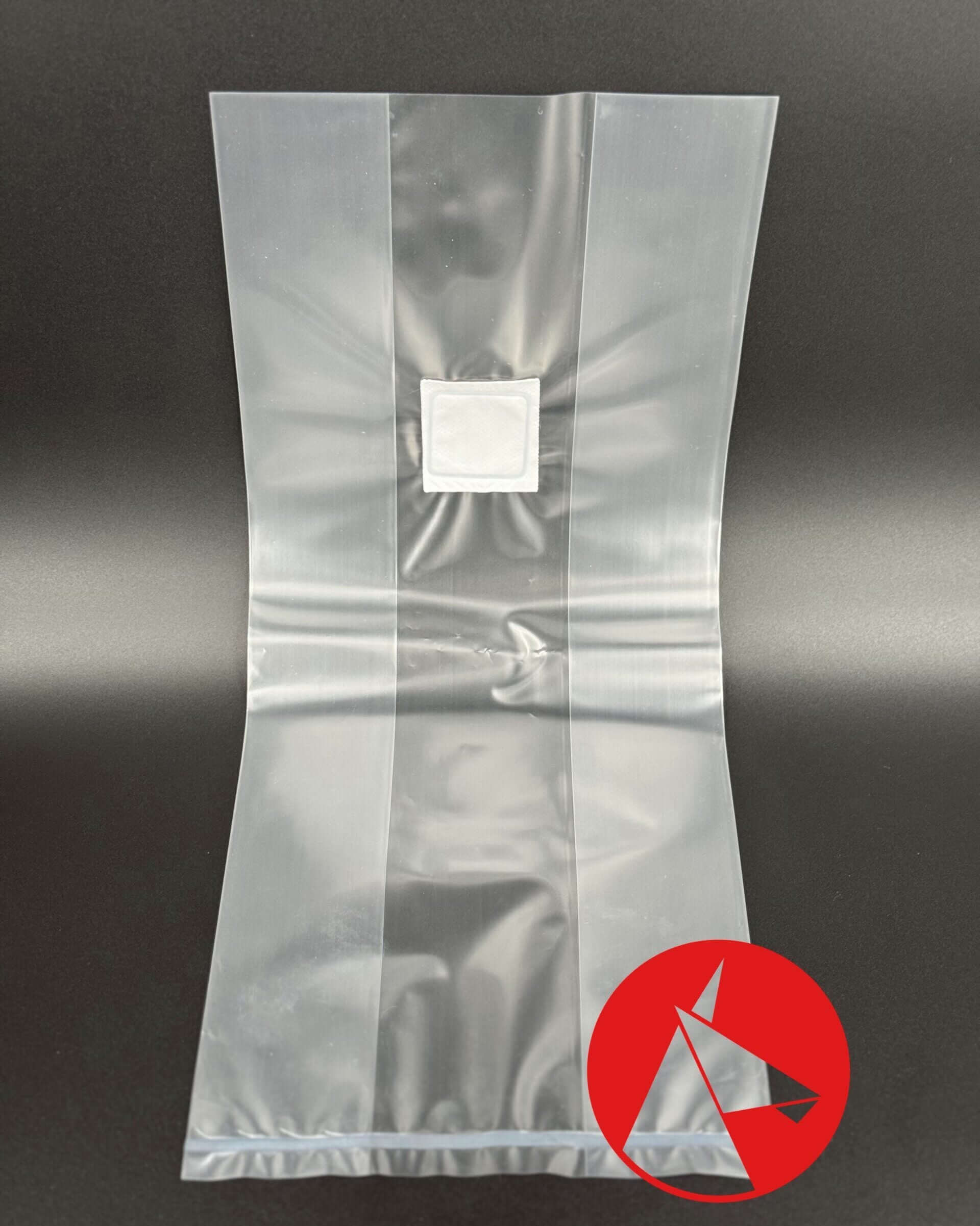
Featuring side gussets and a high-quality breathable filter, these bags stand upright once filled and provide excellent structural stability with a reinforced bottom seal. Manufactured by Unicorn using proprietary additives, the bags remain flexible at all temperatures, including after sterilization. The wide opening allows for easy sealing, while the durable bottom seal is built to withstand agitation during handling and processing.
Filter Type Descriptions
Type B Filter
The Type B filter offers high gas exchange performance. With 90% pore coverage and larger pore sizes (5 microns) than the Type A filter, it allows bags to be sealed prior to autoclaving. In most other bags, filters either permit competing fungi to enter or contain pores that are too small and may rupture during sterilization.
Type T Filter
The Type T filter features 0.2-micron pores and 90% filtration efficiency. It is specifically designed for spawn production, providing strong contamination control while maintaining adequate airflow.
Type A Filter
The Type A filter is designed for shiitake cultivation. It has a nominal pore size of 0.5 microns, offering approximately 80% efficiency at this level. With 50% of the surface area dedicated to filtration, it provides enhanced breathability, allowing shiitake mycelium to thrive in higher CO₂ environments.